Foods and Vitamins for Aging Eyes When Blurry Vision Appears
Foods and vitamins cannot fix age-related blurry vision, and no nutrient replaces glasses, surgery, or an eye exam. A diet rich in vegetables, fish, and other whole foods may support long-term eye health[1], and one specific vitamin and mineral formula was studied in people who already have macular degeneration[2]. The first step is to find out which condition is causing the blur.
- Age-related blur usually comes from presbyopia, cataract, or AMD, and each needs an eye exam to confirm.
- Sudden blurry vision, eye pain, flashes, or vision loss needs urgent care, not a supplement.
- The strongest nutrient research, AREDS2, was done in people who already have intermediate or advanced AMD.
- Food comes first: leafy greens, fish, colorful produce, nuts, and whole grains may support eye health.
- Most eye supplements do not disclose full amounts, and many ingredients have little evidence for age-related blur.
What causes blurry vision as you age?
Three common age-related causes are presbyopia, cataract, and age-related macular degeneration (AMD). They feel different and are managed differently.
Presbyopia. The eye's lens gradually loses flexibility, which makes close-up focus harder. Many people notice it when reading small print, usually in their 40s or later[3]. Reading glasses and other lens options are the usual fix. Our guide to presbyopia covers this in more detail.
Cataract. A cataract is a clouding of the eye's lens. It can make vision blurry, hazy, or dim[4]. Surgery is the standard treatment when it interferes with daily life. See our page on cataracts for more.
AMD. AMD damages the macula, the part of the retina used for sharp, central vision. It can blur or distort what is straight ahead[5]. Read more about macular degeneration.
Other causes exist too. Uncorrected refractive errors such as nearsightedness, farsightedness, and astigmatism are a frequent reason for blur at any age[6]. Dry eyes and long screen sessions can also blur vision, so it helps to read about dry eyes and eye strain. For a symptom checklist, see signs and symptoms of blurry vision.
Blurry vision red flags: when to skip the diet and get care
Nutrition is not the right response to sudden changes. Blurry vision that comes on suddenly, or that appears with eye pain, a sudden loss of vision, flashes of light, new floaters, or other symptoms such as weakness or trouble speaking, needs urgent medical attention[7][8].
New straight lines that look wavy, or a dark spot in the center of vision, should also be checked promptly[5]. Gradual blur still deserves a dilated eye exam, because several eye diseases cause no pain early on. An eye doctor can tell whether the cause is a prescription change, a cataract, AMD, or something else, and can advise on treatment.
Which nutrients have research for aging eyes?
The strongest evidence comes from the Age-Related Eye Disease Studies, AREDS and AREDS2, run by the National Eye Institute. These trials tested high-dose combinations of vitamins and minerals in people who already had AMD[2].
The AREDS2 formula contains vitamin C, vitamin E, zinc, copper, lutein, and zeaxanthin[2]. In AREDS2, adding lutein and zeaxanthin, or omega-3 fatty acids, was studied against the original formula. The omega-3s did not show an added benefit for AMD progression[9]. Lutein and zeaxanthin could be used in place of beta-carotene[9].
Three limits matter:
- The research was done in people with intermediate or advanced AMD, not in the general public[2].
- It looked at slowing AMD progression, not at clearing blurry vision from presbyopia or cataract.
- Evidence is limited that these supplements benefit people with healthy eyes or early disease[2].
For a deeper look, see our AREDS2 formula guide and guide to protecting the retina with age.
Food first: eating for eye health
The American Academy of Ophthalmology points to a balanced diet as the foundation for eye health, with fruits, vegetables, and fish as common recommendations[1]. No single food has been shown to reverse blur, but this pattern is low-risk and good for the rest of the body too.
Foods worth including regularly:
- Leafy greens such as spinach, kale, and collards, which contain lutein and zeaxanthin[1].
- Fatty fish such as salmon and tuna, a source of omega-3 fatty acids[1].
- Citrus fruit, peppers, and other colorful produce, for vitamin C[1].
- Nuts and seeds, for vitamin E[1].
- Beans, whole grains, and other zinc-containing foods[1].
Food has an advantage over pills: nutrients arrive together and in ordinary amounts. Our nutrients and supplements overview lists more of the nutrients people ask about.
Do eye vitamins help blurry vision?
Not in the way many ads suggest. Presbyopia is a focusing problem and is corrected with lenses[3]. Cataracts are treated with surgery when needed[4]. A vitamin is not a substitute for either.
The one clear research signal is for people already diagnosed with intermediate or advanced AMD, where a specific formula was studied[2]. If an eye doctor has told you that applies to you, ask which formula and dose is appropriate. Self-selecting high-dose products carries its own risks, since zinc and vitamin A or beta-carotene have dose-related limits, and smokers are advised to avoid beta-carotene[9].
For everyday blur linked to screens, home habits may matter more than pills. See home care for blurry vision and why vision can blur after phone use.
How the eye supplements we reviewed compare
Here is how the four formulas we reviewed line up against the research above. None of them has been shown to treat or prevent an eye disease, and amounts are mostly undisclosed.
VisiFlora is the featured product. Its listed ingredients overlap with several AREDS2 nutrients: lutein and zeaxanthin from marigold, vitamin C, vitamin E, zinc, and copper[2]. These may support macular pigment and antioxidant status. However, the label does not disclose amounts here, so it cannot be matched to the AREDS2 doses, and no clinical data on the finished product is cited. It also lists beta-carotene, which AREDS2 moved away from, plus astaxanthin, ginkgo, saffron, bilberry, and others with limited or no good evidence for age-related blur. Ginkgo may increase bleeding risk with blood thinners, so check with a doctor first.
TheyaVue names lutein, zeaxanthin, vitamin C, vitamin E, and zinc, which overlap with AREDS2. It does not list copper, and it adds calcium, bilberry, and rutin. Only eight of its claimed 24 ingredients are named, and amounts are not given.
Vision 20 lists lutein, zeaxanthin, zinc, beta-carotene, and vitamin A as retinyl palmitate, alongside lycopene, taurine, grape seed, and bilberry. Smokers should avoid beta-carotene, and vitamin A and zinc can be harmful at high intake.
iGenics says it is based on AREDS-2 ingredients but does not itemize them. It also lists ginkgo, bilberry, saffron, and turmeric. AREDS2 was studied in people with AMD, not for general eye health[2], and the evidence for ginkgo in AMD is limited.
Overall, the evidence is strongest for the lutein, zeaxanthin, vitamin C, vitamin E, zinc, and copper combination, and only in people with AMD. For the other listed ingredients, evidence for age-related blur is weak or absent. Our reviews are for comparison only and are not a recommendation to take any of them.
A practical plan
- Book a dilated eye exam if blur is new or getting worse.
- Treat sudden changes as same-day concerns.
- Update glasses, and ask whether presbyopia or a cataract is involved.
- Build meals around greens, fish, colorful produce, nuts, and whole grains.
- Ask your eye doctor before using any supplement, especially if you smoke, take blood thinners, or already take a multivitamin.
More answers are in our blurry vision FAQ and the main blurry vision hub.
Eye supplements we have reviewed
Want to compare products? Read what the research says about nutrients for blurry vision first, then compare the products below.
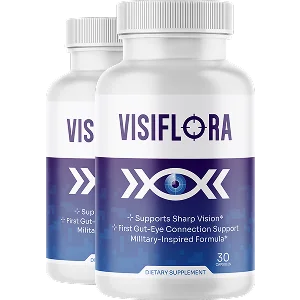
VisiFlora
Lists lutein and zeaxanthin, vitamin C, vitamin E, zinc, and copper, which overlap with the AREDS2 nutrients studied in people with AMD, but amounts are not disclosed and no trial of the finished product is cited. Ingredients such as astaxanthin, ginkgo, eyebright, and coleus have no good evidence for age-related blur.
Listed ingredients: Astaxanthin, Vitamin C, Vitamin E, Copper, Selenium, Chromium
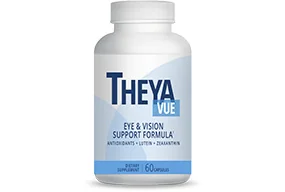
TheyaVue
Names lutein, zeaxanthin, vitamin C, vitamin E, and zinc, which relate to AREDS2 research in people with AMD, though copper is not listed and amounts are not given. Bilberry and rutin have limited evidence for this topic, and 16 of the 24 claimed ingredients are not named.
Listed ingredients: Lutein, Zeaxanthin, Vitamin C, Calcium, Vitamin E, Bilberry Extract
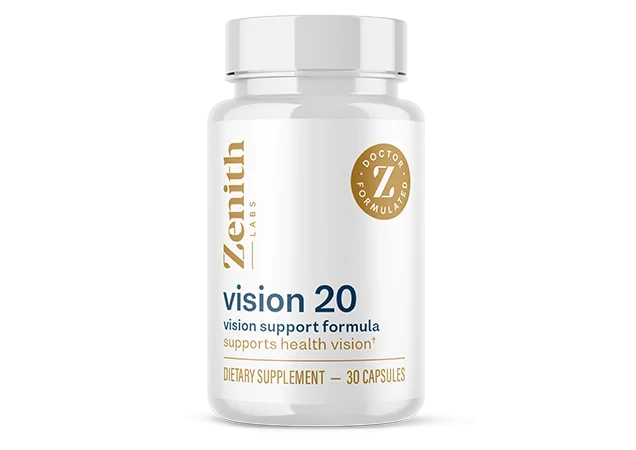
Vision 20
Lutein, zeaxanthin, and zinc relate to AREDS2 research in AMD, but amounts are not disclosed. It also contains beta-carotene, which smokers should avoid, and retinyl palmitate, so total vitamin A intake matters. Lycopene, taurine, grape seed, and bilberry have no good evidence for age-related blur.
Listed ingredients: Lutein, Zeaxanthin, Zinc, Beta-carotene, Lycopene, Rose Hips
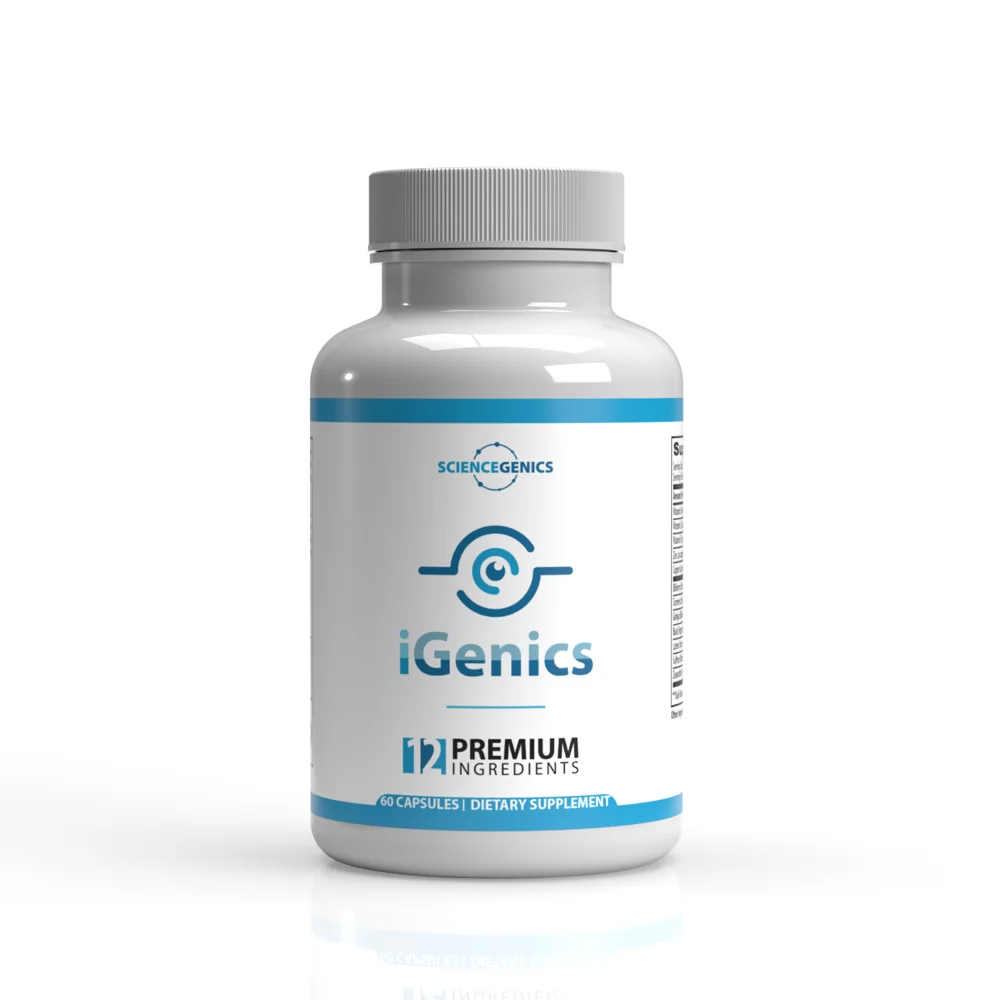
iGenics
Says it is based on AREDS-2 ingredients, but these are not itemized, so the match to the studied formula cannot be checked. AREDS2 was studied in people with AMD, and evidence for ginkgo, bilberry, saffron, and turmeric for age-related blur is limited.
Listed ingredients: Ginkgo biloba, AREDS-2 formula ingredients (not itemized), Bilberry, Saffron, Turmeric + BioPerine
Frequently asked questions
What vitamins are good for aging eyes?
The best-studied combination is vitamin C, vitamin E, zinc, copper, lutein, and zeaxanthin, tested as the AREDS2 formula in people with intermediate or advanced AMD[2]. Evidence is limited for people without AMD. A balanced diet is the safer starting point[1].
Can eating carrots or leafy greens clear up blurry vision?
No food has been shown to clear blur caused by presbyopia or cataract. Leafy greens, fish, and colorful produce are part of an eye-healthy diet[1], but glasses or surgery are the usual answers for those conditions[3][4].
When is blurry vision an emergency?
Sudden blur, sudden vision loss, eye pain, flashes of light, or blur with symptoms such as weakness or trouble speaking should be treated as urgent[7][8]. Seek same-day care rather than waiting to see if it passes.
Should smokers take eye supplements with beta-carotene?
Smokers are advised to avoid beta-carotene supplements. This is one reason the AREDS2 formula used lutein and zeaxanthin in its place[9]. Talk to an eye doctor before choosing any product.
Sources
- American Academy of Ophthalmology: Diet and nutrition for eye health
- National Eye Institute: Age-Related Eye Disease Studies (AREDS/AREDS2)
- National Eye Institute: Presbyopia
- National Eye Institute: Cataracts
- National Eye Institute: Age-related macular degeneration
- National Eye Institute: Refractive errors
- American Academy of Ophthalmology: Blurry vision
- MedlinePlus: Vision problems
- AREDS2 Research Group. JAMA 2013: lutein + zeaxanthin and omega-3 fatty acids for AMD